
Positioning Yourself by a Horse’s Shoulder and Walking in Cadence:
A Superior Training Approach
By Susan Connell | Cornerstone Ranch | https://CornerstoneRanch.org
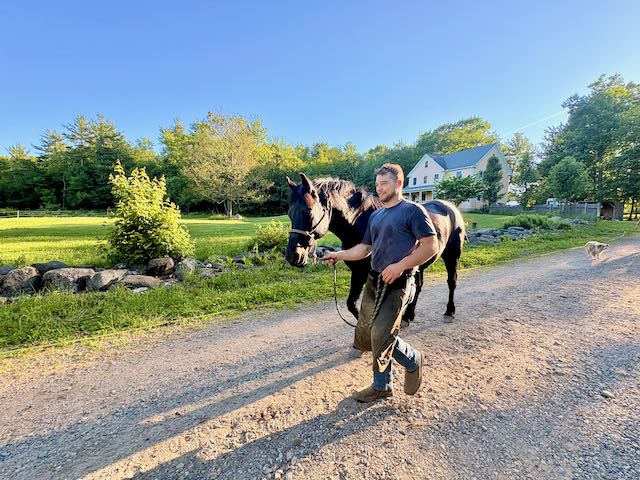
When working with horses, the handler’s position relative to the horse is a fundamental aspect of effective communication and training. Traditionally, some handlers may walk in front of the horse, relying on lead ropes and pressure to guide movement. However, positioning oneself at the horse’s shoulder and walking in cadence with the horse’s steps offers far greater benefits for the horse’s training, well-being, and partnership development. Here’s why this approach is superior:
- Encourages Partnership, Not Dominance
Walking at the horse’s shoulder, rather than ahead and pulling, positions the handler as a partner rather than a leader demanding compliance. Horses are social animals that respond best to clear, consistent cues and mutual respect. By walking beside the horse’s shoulder, you invite the horse into a two-way conversation, building trust and cooperation instead of relying on force or intimidation. - Promotes Natural Movement and Balance
When a handler walks in cadence with the horse, matching stride for stride, the horse can move freely and naturally. Pulling from the front can disrupt the horse’s balance, cause resistance, and even encourage the horse to lean on the halter or brace against the pressure. Shoulder positioning helps keep the horse’s head, neck, and body in alignment, supporting better posture, flexibility, and responsiveness. - Enhances Communication Through Body Language
Horses are highly attuned to body language. By staying at the shoulder, handlers can use subtle shifts, gestures, and energy to guide the horse. This proximity allows the handler to communicate through gentle cues rather than physical force. The horse learns to respond to the handler’s body, not just the lead rope, which encourages lighter, more refined responses and a more attentive horse. - Reduces Stress and Anxiety
Being pulled from the front can be confusing or stressful for a horse, especially if the handler moves too quickly or unpredictably. Walking at the shoulder, in rhythm, provides a calming influence. The horse can see the handler clearly, feels supported, and is less likely to become anxious or reactive. This approach fosters confidence, especially in young or inexperienced horses. - Teaches Self-Carriage and Responsibility
A horse trained to walk beside a handler, matching pace, learns to regulate its own movement and maintain a respectful distance. This develops self-carriage—a horse’s ability to maintain balance without constant correction. Pulling from the front encourages dependence on the handler’s rope rather than teaching the horse to think and move independently. - Safer for Both Horse and Handler
Walking in front of a horse, especially while pulling, can be dangerous. If the horse spooks or surges forward, the handler is directly in the horse’s path. By staying at the shoulder, the handler remains aware of the horse’s body language and is in a safer position to redirect or stop the horse if needed. - Using a Whip as a Supportive Cue
Working at the horse’s shoulder also allows the whip to be used as a subtle, supportive cue—never as punishment. If the horse lags, start with a clear and consistent verbal cue. If there’s no response, give a light, well-timed tap with a long whip behind the girth or on the hindquarters. The touch should be calm and clear, serving only to reinforce your request. This approach teaches the horse to move forward from light aids and reduces reliance on pulling or pressure. With consistency, the horse becomes more responsive, and the whip becomes an occasional, gentle reminder rather than a main aid.
Conclusion
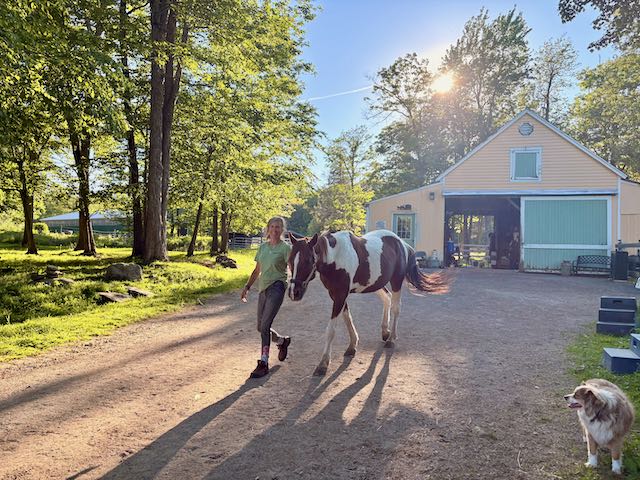
Positioning yourself by a horse’s shoulder and walking in cadence is a thoughtful, horse-centered approach that prioritizes communication, safety, and effective learning. It transforms training from a battle of wills into a harmonious partnership, allowing both horse and handler to move together with understanding and trust. This method not only improves the horse’s training results but also deepens the bond between horse and human—making it the clear choice for conscientious equestrians.
Positioning yourself by a horse’s shoulder and walking in cadence is a thoughtful, horse-centered approach that prioritizes communication, safety, and effective learning. It transforms training from a battle of wills into a harmonious partnership, allowing both horse and handler to move together with understanding and trust. This method not only improves the horse’s training results but also deepens the bond between horse and human—making it the clear choice for conscientious equestrians.