FINDING STILLNESS IN MOTION
By Susan Connell | Cornerstone Ranch
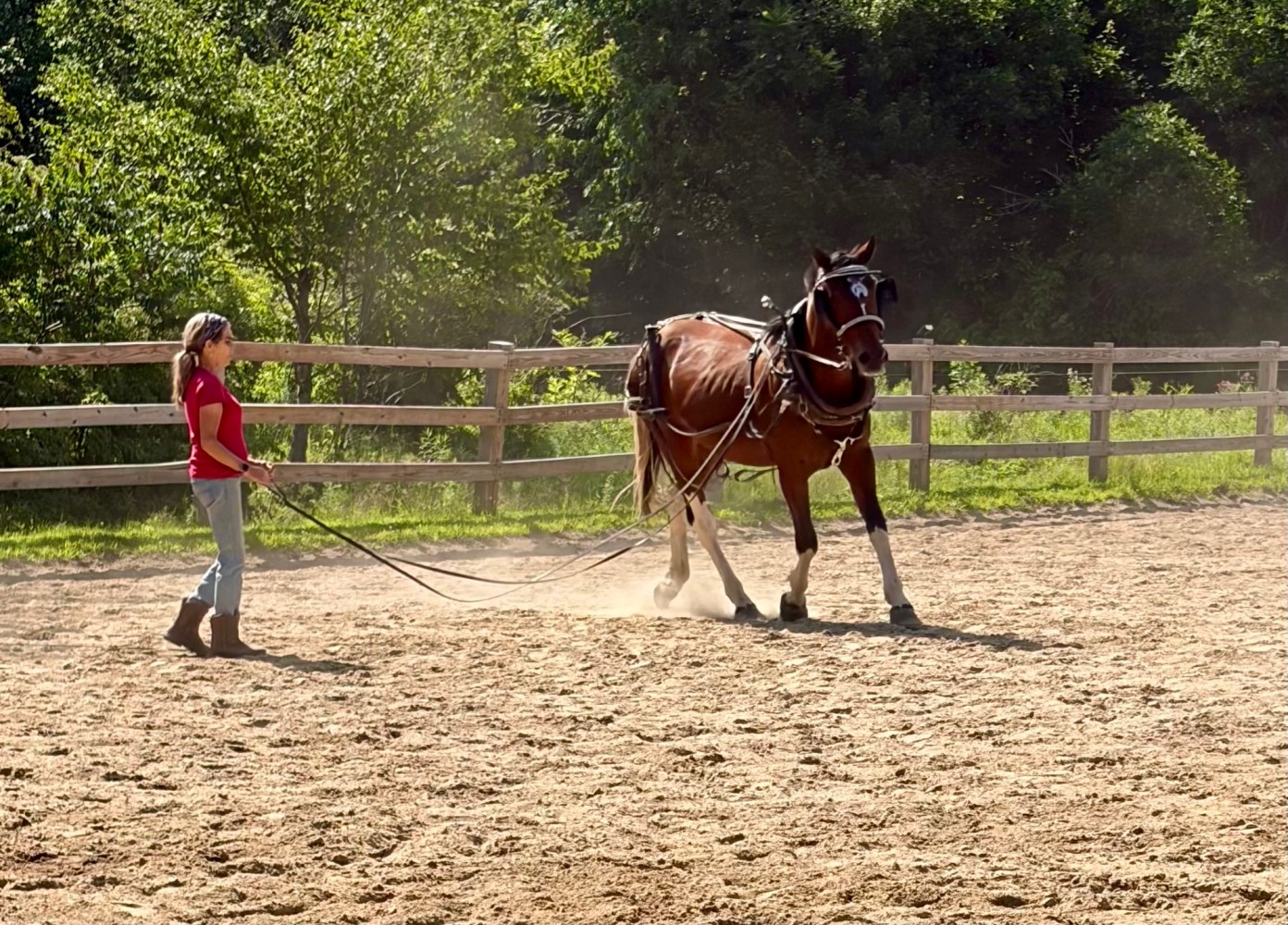
There are many opinions about how to longe horses. One common method has the handler moving around the circle with the horse, which I call “Longeing Aerobics.” Many people think this is the only correct way. My approach is different. I like to stay still and pivot in the center while the horse moves around me on the longe line or in the round pen.
|
Two-year-old Reece, a Percheron cross, harnessed as part of his training to become a driving and riding horse at the Ranch.
|
Why Stillness?
I choose stillness because it gives the horse a clear and steady guide. By not moving with the horse, I offer a calm and stable presence. This approach helps in other work too, like leading, ground driving, riding, and driving, where I use steady voice commands instead of moving around or using extra energy on foot. The horse learns to listen to my voice, not my movement. This makes things less confusing and builds trust.
Sometimes, stepping into the “driving line” helps the horse move forward, and pointing my body at the horse’s shoulder tells them to slow down or stop. At first, I use these clear body cues along with voice commands. Once the horse understands and listens to my voice, I stop using the body cues.
Harmony Across Disciplines
With this method, I use the same cues whether I am longeing, leading, riding, or driving one horse or a pair. The horse does not need to look for big movements from me. Instead, they listen for clear commands they already know. They keep the pace I ask for until I give a new voice command or say “whoa” to stop. This consistency helps the horse feel safe and builds a reliable partnership faster than if I changed my approach for each activity.
Examples from Tradition and Practice
On the other hand, many modern trainers move with the horse because they believe it helps with engagement and connection. Their method often includes copying the horse’s movement and using energetic body language. While this can work for some goals, I think it makes the horse depend on the handler’s movement. The horse may start to wait for this energy instead of listening to voice or subtle cues. This can make it harder for the horse to adjust when riding or driving, since the handler’s big movements are not there anymore.
On “Whoa”—A Clear, Unambiguous Cue
When I say “whoa,” I want the horse to stop right away, no matter where they are on the circle. Some trainers like the horse to leave the track and come to the handler when they hear “whoa,” but I do not agree with this. For me, “whoa” means stop, not “come here.” This clear meaning is safer and more useful, especially when working in-hand, riding, or driving, where the horse needs to halt and stay still, not look for the handler, rider, or driver. Teaching the horse to stop on the track shows them that commands should be followed exactly and without confusion.